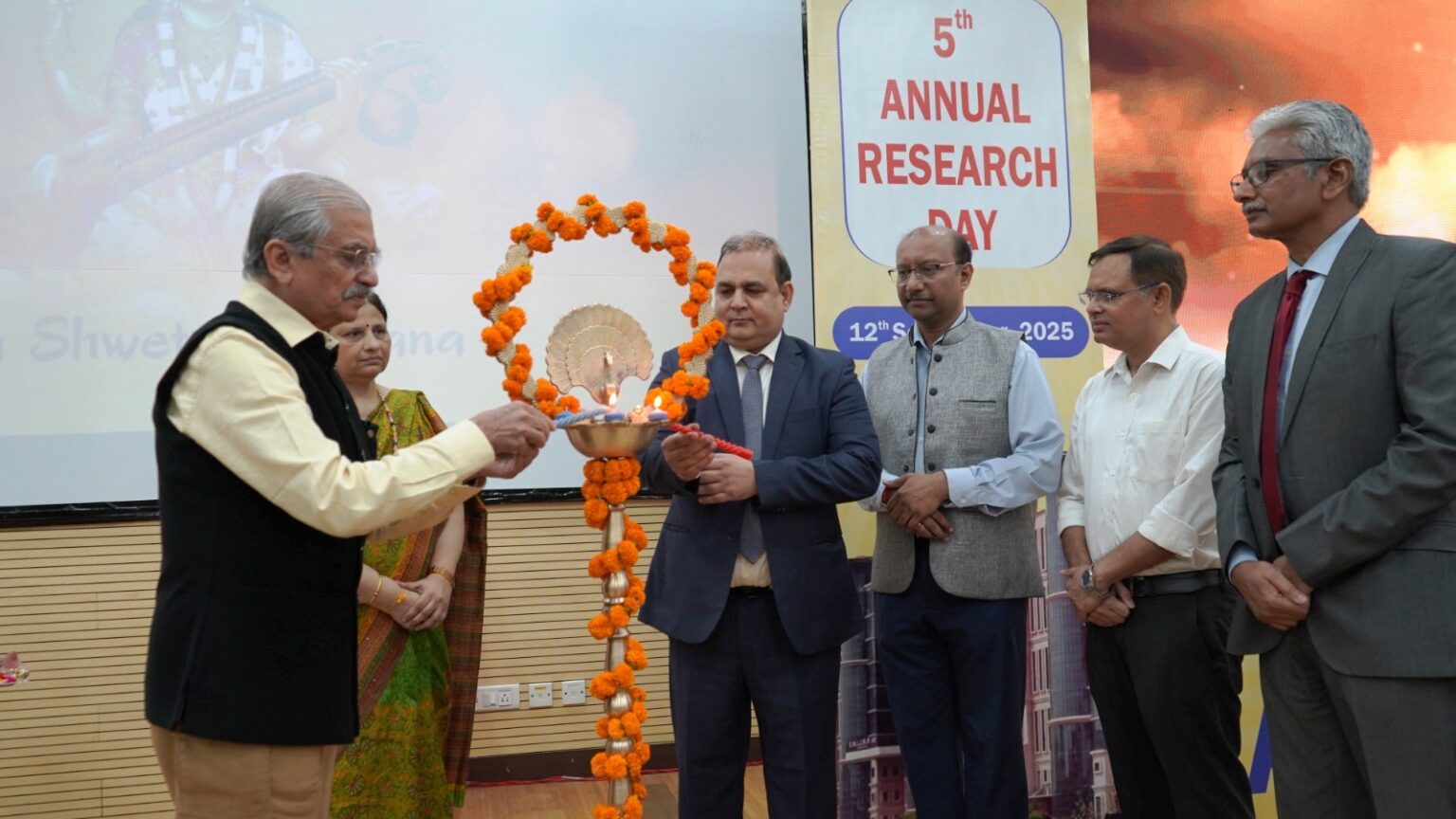
Lucknow– Artificial Intelligence (AI) is set to transform the way heart diseases are detected and treated in India, enabling early diagnosis and personalized care for patients who may appear healthy but are actually at risk. This was highlighted by Dr. Sudhir Rathore, Interventional Cardiologist at Frimley Health NHS Foundation Trust, Surrey, UK, during a special lecture at Dr. Ram Manohar Lohia Institute of Medical Sciences (RMLIMS).
Delivering a talk on “The Role of Artificial Intelligence in Cardiovascular Diseases” as part of the institute’s 5th Annual Research Day, Dr. Rathore said, “AI tools can identify hidden risks, predict outcomes, and provide accurate treatment strategies. In the near future, AI-based screening will allow mass risk assessment and improve treatment precision, ultimately reducing the burden of heart disease mortality in India.”

The program’s chief guest, Prof. (Dr.) N.K. Arora, Executive Director of The Inclen Trust International, spoke on “Why Research is Essential?” He stressed that research is not an option but a necessity in modern medicine. “It refines clinical practice, enhances the quality of patient care, and strengthens evidence-based medicine. Without research, medical science risks stagnation. Every physician has a responsibility to contribute to research so that patients receive the best possible care,” he said.

In his presidential address, RMLIMS Director Dr. C.M. Singh praised the growing research culture at the institute and encouraged faculty members to pursue innovative, high-quality, and multidisciplinary projects. “We must not only treat patients but also shape the future of medicine. Each department should aim for globally recognized research contributions,” he noted.
The event brought together faculty, researchers, and international experts who deliberated on the future of medical science and the critical role of research. The day also featured paper and poster presentations by students and faculty, along with special sessions on clinical medicine, translational research, and digital health technologies.







 ---------------------------------------------------------------------------------------------------