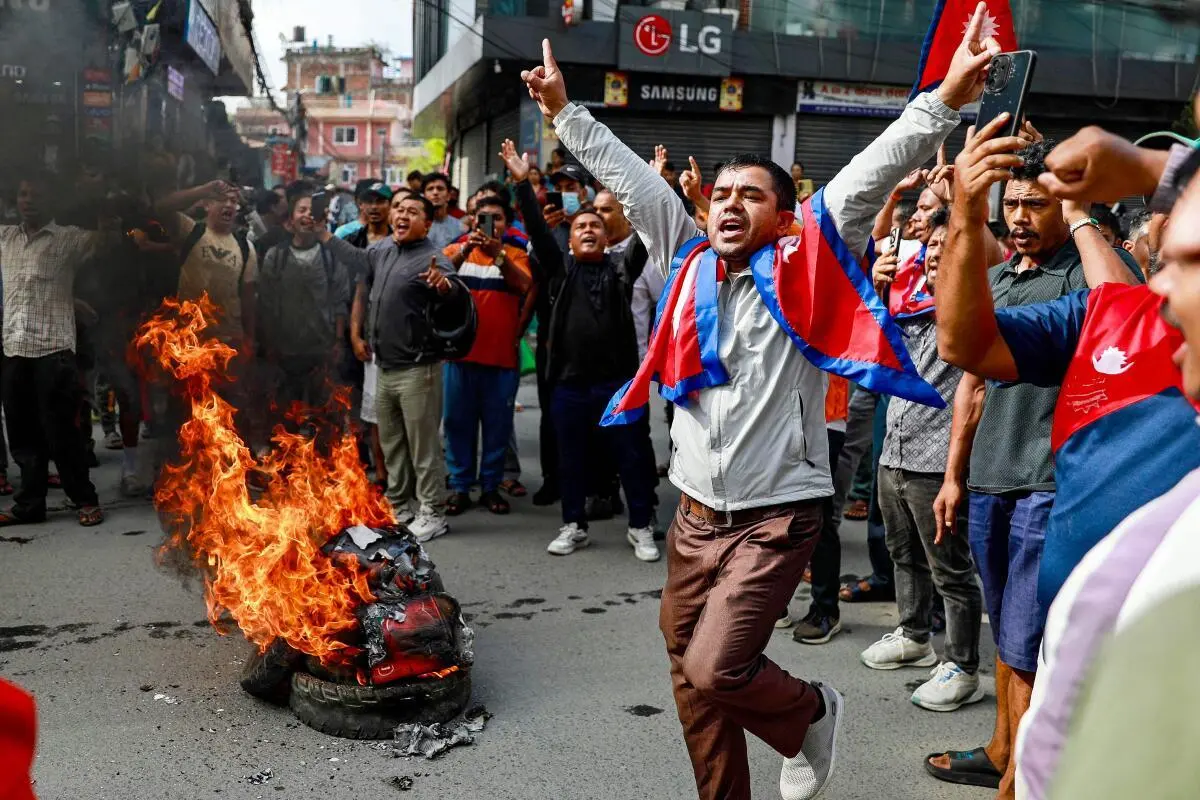
Kathmandu: Nepal has witnessed a massive public uprising that many experts say was inevitable given decades of political instability, corruption, and widespread discontent. The unrest, which began on September 8, 2025, saw thousands of citizens, especially youth, take to the streets of Kathmandu and other major cities to protest against government mismanagement and social inequality.
The protests quickly escalated into violent confrontations. Demonstrators targeted government buildings, including the Parliament House, Prime Minister’s Office, Singh Durbar, Supreme Court, President’s Residence, and various ministries, along with political party headquarters such as the Nepali Congress and the Communist Party offices. High-profile establishments, including the Hilton Hotel and the Kantipur Media Group, were also attacked. Key infrastructures, such as Tribhuvan International Airport and Gautam Buddha International Airport, sustained temporary disruptions.
The violence resulted in over 51 deaths, including 21 protesters, 9 prisoners, 3 police officers, and 18 others. Amid mounting pressure, Prime Minister K.P. Sharma Oli resigned, and the army enforced a curfew to restore order. Following the unrest, the political vacuum led to the historic appointment of Sushila Karki as Nepal’s first woman Prime Minister.
Eyewitness accounts describe widespread frustration over corruption, nepotism, economic inequality, and youth unemployment. During a visit five years ago, travelers had observed the dilapidated condition of roads, public transport, and basic amenities in towns like Janakpur, highlighting systemic neglect. Local officials had openly admitted that 90% of public funds were misappropriated, leaving only a fraction for developmental work. Many analysts argue that such long-standing governance failures created the conditions for the uprising.
Political observers note that while some commentators attempt to frame the revolt as a push for a Hindu nation, a return to monarchy, or foreign conspiracies, the root cause remains the chronic neglect of citizens’ welfare and basic infrastructure. For decades, development and resources were concentrated primarily in Kathmandu, leaving other regions underdeveloped and largely ignored. This centralization created frustration among communities across Nepal’s seven provinces and 77 districts.

The Nepal uprising, following in the footsteps of protests in Sri Lanka and Bangladesh, sends a warning to leaders worldwide who prioritize personal gain over public service. Citizens, long disillusioned with corruption and favoritism, demonstrated that prolonged neglect and exploitation inevitably lead to public revolt.
The Nepalese people’s demonstration underscores a universal truth: when governments fail to address unemployment, corruption, and inequity, public anger can no longer be contained. The events in Nepal stand as a stark reminder of the consequences of ignoring citizens’ voices.