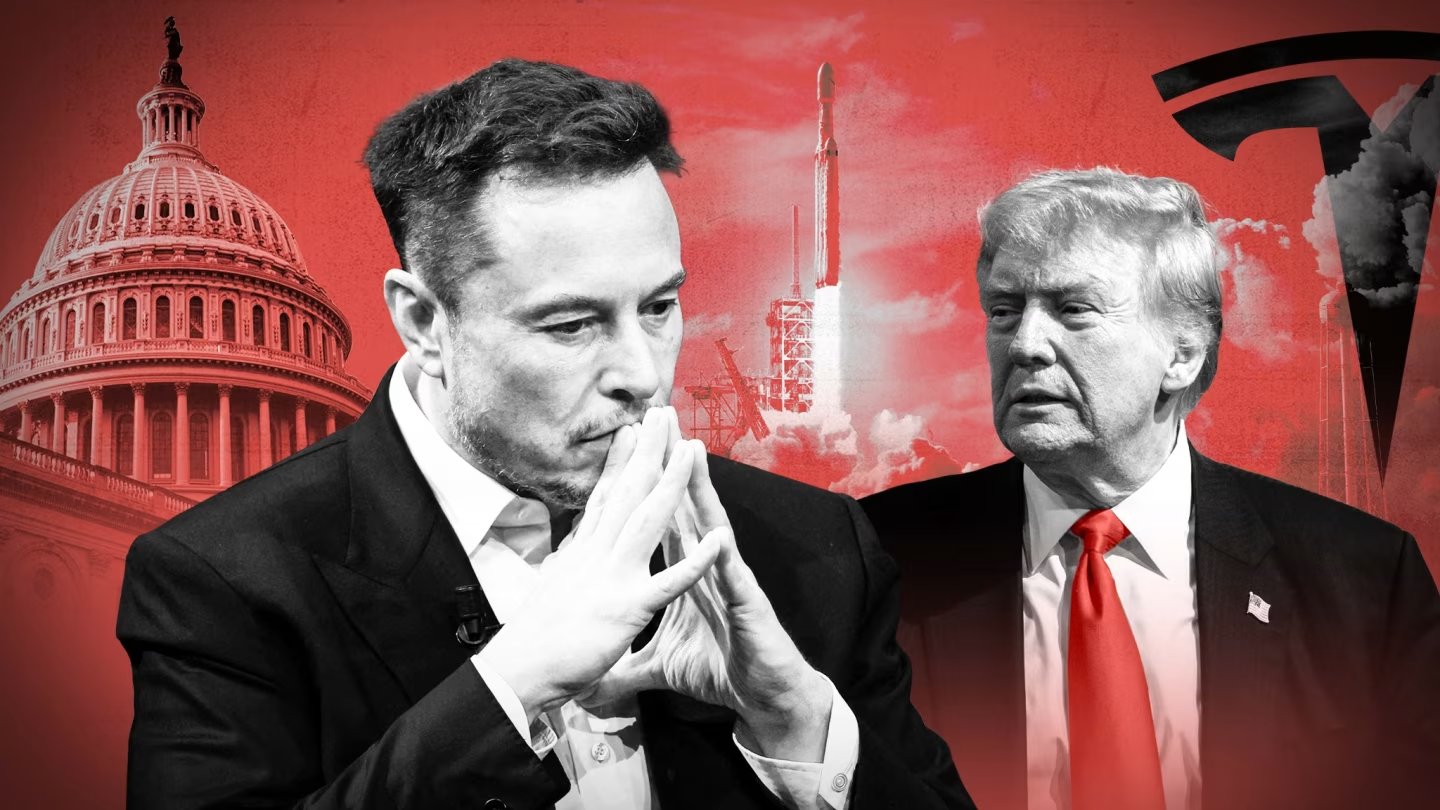
Washington: In a move that is sure to please his former adviser Elon Musk, US President Donald Trump signed an executive order that relaxed restrictions for the commercial space sector, including doing away with certain environmental studies. An environmental organization called the executive order “reckless,” despite its stated goal of “substantially” increasing the frequency of space launches in the United States.
Trump has promoted a number of space projects, including sending people to the Moon and Mars, since he returned to the White House in January.
Musk’s private company SpaceX plans to use its enormous Starship rocket to transport the missions to the Moon and Mars.
But Starship has seen a string of failures, including a spectacular explosion in June during its most recent scheduled test.
With more than 130 rockets of all sizes launched last year, SpaceX leads the worldwide launch business. With Trump’s executive order, that number is expected to increase.
“It is the policy of the United States to enhance American greatness in space by enabling a competitive launch marketplace and substantially increasing commercial space launch cadence” by the year 2030, according to the directive.
Musk, who has long argued for the liberalization of the space business, may gain from the shift. Prior to their spectacular, public fallout in July, the wealthiest man in the world was a key adviser to Trump.

Transportation Secretary Sean Duffy, who attended the signing and is now NASA’s administrator, was also urged by the presidential order “to eliminate or expedite the Department of Transportation’s environmental reviews” for launches.
The environmental effects at the locations where Starship, the biggest and most powerful rocket in history, takes off have drawn repeated criticism from SpaceX.
Trump’s latest executive order, according to the US-based NGO Center for Biological Diversity, “paves the way for the massive destruction of protected plants and animals.”
In a statement, Jared Margolis of the center stated, “This careless order puts people and wildlife at risk from private companies launching giant rockets that often explode and wreak devastation on surrounding areas.”
The success of Starship is crucial to Musk’s aspirations of populating Mars, and SpaceX has been placing bets that its “fail fast, learn fast” philosophy would ultimately succeed.
In early May, the FAA authorized a five-to-25-launch yearly increase in Starship rockets, claiming that the increased frequency would not have a negative environmental impact.