Lucknow: Lucknow, the City of Nawabs, is not just a cultural or culinary capital; it is an architectural powerhouse that seamlessly weaves the grandeur of its Nawabi past with the sleek aspirations of modernity. From the labyrinthine marvels of the Bara Imambara to the contemporary elegance of the Ambedkar Memorial Park, Lucknow’s skyline tells a story of artistry, resilience, and evolution. Its buildings are not mere structures but living narratives of a city that has thrived through centuries, blending Mughal opulence, Awadhi finesse, and modern ingenuity.
The Nawabi Legacy: A Foundation of Grandeur
“Monuments That Whisper Tales of Royalty”
Lucknow’s architectural saga begins with the Nawabs of Awadh, whose patronage transformed the city into a hub of artistic and architectural excellence in the 18th and 19th centuries. The Nawabi era gifted Lucknow with structures that are not just buildings but symbols of a refined aesthetic that blended Persian, Mughal, and local influences into a distinctive Awadhi style.
The Bara Imambara, built in 1784 by Nawab Asaf-ud-Daula, is a crown jewel of this legacy. This colossal complex, constructed as a famine-relief project, is an architectural marvel that defies conventional engineering. Its central hall, one of the largest arched constructions in the world, spans 50 meters without supporting pillars—a feat that continues to baffle architects. The intricate Bhulbhulaiya, a maze of over 1,000 passages and staircases, adds an element of mystery, drawing tourists and historians alike. The Imambara’s blend of functionality, scale, and artistry showcases Lucknow’s ability to create structures that are both practical and poetic.
Close by, the Chota Imambara, built by Nawab Muhammad Ali Shah in 1838, is a testament to delicate craftsmanship. Often called the “Palace of Lights” due to its dazzling chandeliers and glasswork, this smaller yet equally enchanting Imambara exudes elegance. Its ornate stucco work, calligraphy, and symmetrical design reflect the Nawabi obsession with beauty in every detail. The silver throne and gilded domes add a touch of divine splendor, making it a spiritual and architectural gem.
Then there’s the Rumi Darwaza, a 60-foot gateway inspired by Istanbul’s Sublime Porte. Erected in 1784, this towering structure served as the grand entrance to the city. Its intricate carvings and robust arches are a nod to Mughal architecture, yet its unique silhouette—resembling a Mexican hat—sets it apart as an Awadhi masterpiece. The Rumi Darwaza is not just a gate; it’s a symbol of Lucknow’s cosmopolitan spirit, welcoming all who enter with a promise of grandeur.
These Nawabi monuments are more than relics; they are active cultural spaces where history is lived and celebrated. Festivals, prayers, and gatherings breathe life into these structures, ensuring they remain integral to Lucknow’s identity. The city’s ability to preserve these treasures while adapting them to modern needs underscores its architectural foresight.
Awadhi Aesthetics: The Soul of Lucknow’s Design
“Craftsmanship That Etches Poetry in Stone”
What sets Lucknow’s architecture apart is its Awadhi aesthetic—a fusion of Mughal symmetry, Persian motifs, and local sensibilities. This style is characterized by intricate jali (lattice) work, ornate stucco, and a harmonious balance of form and function. Unlike the imposing fortresses of Rajasthan or the minimalist temples of South India, Awadhi architecture is intimate yet majestic, designed to evoke awe and comfort simultaneously.
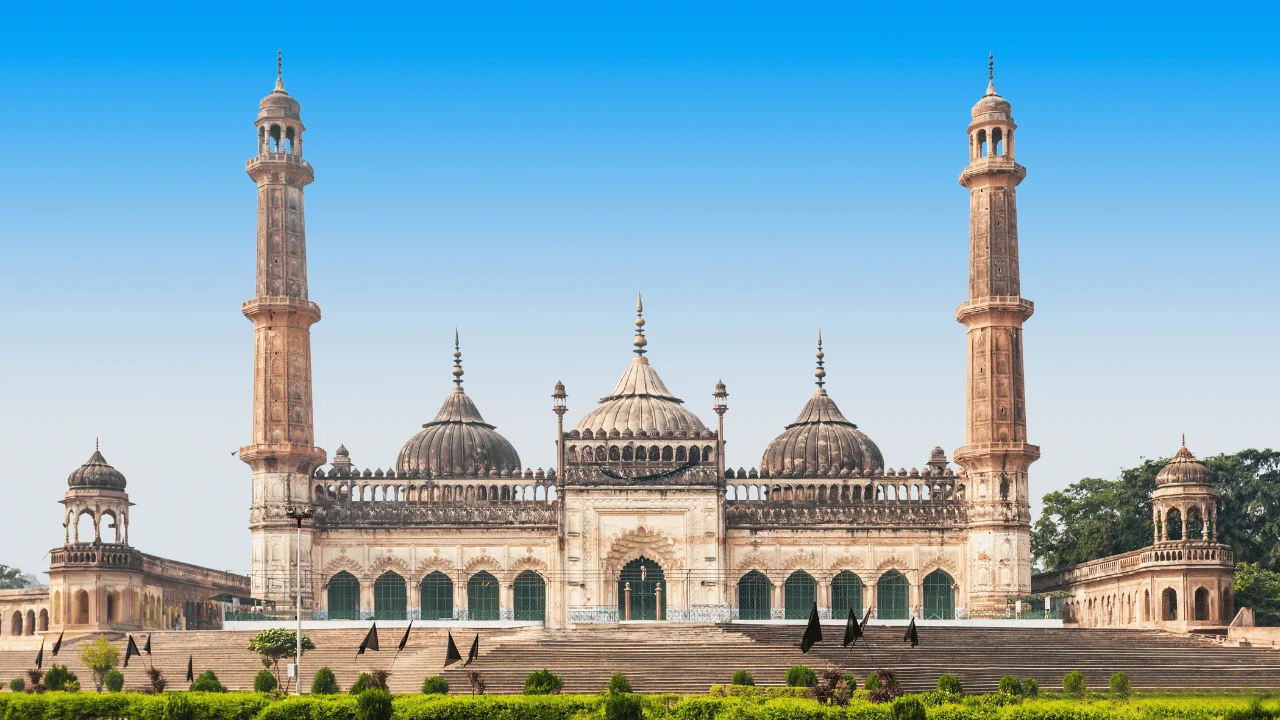
Take the Asafi Mosque, part of the Bara Imambara complex. Its minarets and domes are adorned with delicate floral patterns, and the open courtyard invites contemplation. The mosque’s design reflects the Awadhi emphasis on creating spaces that are spiritually uplifting and visually captivating. Similarly, the Husainabad Clock Tower, built in 1881, combines Gothic and Awadhi elements. Standing at 221 feet, it is India’s tallest clock tower, its robust structure softened by ornamental details that echo the city’s Nawabi heritage.
Lucknow’s residential architecture, particularly its havelis and kothis, further showcases this aesthetic. The Kaiserbagh Palace Complex, though partially in ruins, once epitomized Nawabi luxury with its sprawling courtyards, fountains, and pavilions. The surviving structures, like the Baradari, hint at a lifestyle where architecture was an extension of art. Even today, older neighborhoods like Chowk and Aminabad feature homes with arched doorways, carved wooden balconies, and courtyards that reflect Awadhi elegance on a domestic scale.
This architectural ethos extends to Lucknow’s gardens, which are as integral to its identity as its buildings. The Sikandar Bagh, named after Nawab Wajid Ali Shah’s wife, combines Persian garden layouts with Awadhi landscaping. Its pavilions and water channels create a serene oasis, proving that architecture in Lucknow is not confined to stone but embraces nature as a partner.
Colonial Influences: A Blend of East and West
“Where British Bricks Met Nawabi Brilliance”

The British colonial period added another layer to Lucknow’s architectural tapestry. After the 1857 uprising, the city became a focal point for British administration, leading to the construction of buildings that merged European styles with local traditions. The La Martiniere College, established in 1845, is a prime example. Designed by French Major-General Claude Martin, this sprawling campus blends Baroque and Indo-Saracenic elements. Its turrets, arches, and expansive grounds make it one of India’s most picturesque educational institutions, earning it a UNESCO nomination.
The Residency, another colonial landmark, tells a different story. Built in the early 19th century as the British Resident’s headquarters, it became a battleground during the 1857 siege. Today, its bullet-scarred walls and crumbling arches stand as a haunting reminder of conflict, yet their architectural integrity—blending Georgian and Awadhi styles—remains striking. The Residency’s museum and landscaped gardens add a layer of modern preservation, making it a site where history and architecture converge.
These colonial structures highlight Lucknow’s ability to absorb external influences without losing its core identity. The city’s architects and patrons adapted British designs to suit local climates and tastes, creating a hybrid style that feels uniquely Lucknawi.
Modern Marvels: Lucknow’s Contemporary Canvas
“Building Tomorrow Without Forgetting Yesterday”
Lucknow’s architectural prowess is not confined to its past. The city has embraced modernity with projects that reflect ambition and innovation while respecting its heritage. The Dr. B.R. Ambedkar Memorial Park, inaugurated in 2008, is a bold statement of contemporary design. Spanning 107 acres, this complex features massive domes, statues, and landscaped gardens, all crafted in pink sandstone. Its scale and symmetry echo the grandeur of Nawabi monuments, yet its minimalist aesthetic and focus on social justice mark it as a product of modern India.
The Gomti Riverfront, developed in recent years, transforms the city’s waterfront into a vibrant public space. With amphitheaters, walkways, and lush greenery, it blends urban planning with architectural finesse, offering residents a place to connect with their city. Similarly, the Ekana Cricket Stadium, a state-of-the-art facility, showcases Lucknow’s ability to create world-class infrastructure that rivals global standards.
Even in its residential and commercial sectors, Lucknow is evolving. High-rise apartments, malls like Phoenix Palassio, and IT hubs reflect a city on the move. Yet, many of these modern structures incorporate Awadhi elements—jali work, arches, or courtyards—as a nod to tradition. This balance of old and new is what makes Lucknow’s architectural landscape so dynamic.
Preservation and Future: A City That Builds with Care
“Guarding the Past, Shaping the Future”
Lucknow’s architectural success lies in its commitment to preservation alongside progress. Organizations like the Archaeological Survey of India and local heritage groups work tirelessly to restore monuments like the Bara Imambara and Kaiserbagh. Adaptive reuse—turning havelis into boutique hotels or cultural centers—ensures these structures remain relevant. Meanwhile, urban planning initiatives aim to decongest the old city while promoting sustainable development.
The city’s architects and planners are also looking ahead. Smart city projects, green buildings, and metro infrastructure signal Lucknow’s readiness to embrace the future. Yet, every new project carries a touch of its Nawabi soul, ensuring that the city’s architectural identity remains intact.
Lucknow’s Architectural Symphony
“A City Where Every Brick Tells a Story”
Lucknow is more than a city; it’s an architectural symphony where Nawabi splendor, colonial echoes, and modern innovation play in harmony. From the soaring arches of the Rumi Darwaza to the serene domes of the Chota Imambara, from the battle-scarred Residency to the sleek Ambedkar Park, every structure is a verse in the city’s epic. Lucknow’s ability to preserve its heritage while embracing the future makes it a true architectural powerhouse—a city where history and ambition build a timeless legacy. Whether you’re a historian, an architect, or a traveler, Lucknow invites you to walk its streets and read its story, etched in stone, brick, and glass.