Lucknow: In an effort to promote scientific curiosity and provide young learners with direct exposure to research environments, the CSIR–Central Institute of Medicinal and Aromatic Plants (CSIR–CIMAP), Lucknow organised an educational visit under the CSIR JIGYASA Programme – Student–Scientist Connect initiative.
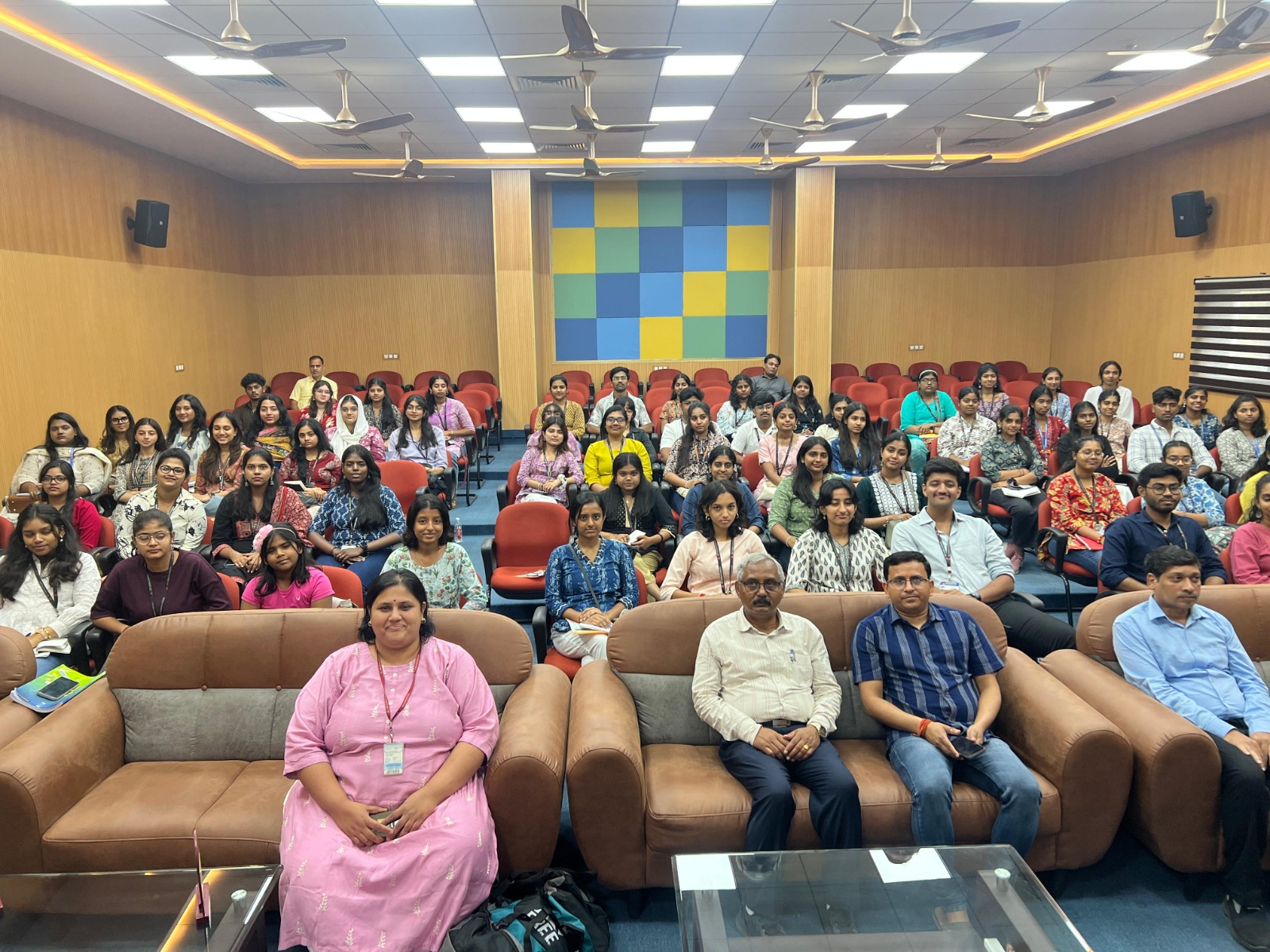
The visit was attended by a group of 75 students from the B.Sc. (Hons.) and M.Sc. (Hons.) Biomedical Sciences programme of Sri Ramachandra Institute of Higher Education and Research, Chennai.
The programme was designed to familiarise students with the role of medicinal and aromatic plants in modern healthcare and to introduce them to the cutting-edge research being conducted at CSIR–CIMAP.
Through lectures, facility visits and interactive sessions with scientists, the participants gained valuable insights into plant-based drug discovery, natural product chemistry and the development of herbal therapeutics.
Dr. Zabeer Ahmed, Director CSIR–Indian Institute of Integrative Medicine (CSIR–IIIM), Jammu, who is also holding the additional charge of Director CSIR–CIMAP, in his message highlighted the importance of initiatives like the CSIR JIGYASA Programme in inspiring young students to pursue scientific research.
He said such interactions provide students an opportunity to understand how scientific research institutions function and how research in medicinal and aromatic plants contributes to healthcare, agriculture and the bioeconomy.
He emphasized that exposure to laboratories, scientists and real-time research activities helps nurture curiosity and encourages students to explore careers in science and innovation.
During the session, Dr. Rajesh Kumar Verma, Chief Scientist, CSIR–CIMAP, delivered an informative talk highlighting the institute’s mandate, research ecosystem and its contributions to the advancement of medicinal and aromatic plants in India.
He explained how CIMAP’s research supports the scientific validation of traditional medicinal systems and facilitates the development of plant-based drugs, essential oils and nutraceuticals.
He also emphasised the importance of conserving plant biodiversity while harnessing it for sustainable healthcare solutions.

Addressing the gathering, Dr. Bhaskar Shukla, Principal Scientist, elaborated on the objectives and broader impact of the CSIR JIGYASA Programme, which aims to bridge the gap between the scientific community and students.
He explained how the programme provides opportunities for young learners to interact with scientists, understand laboratory practices and develop research-oriented thinking.
He also introduced students to CSIR-CIMAP’s digital application developed to provide information on aromatic crops, which serves as an advisory tool for farmers, entrepreneurs and stakeholders interested in cultivating aromatic plants and developing related value-added products.
As part of the educational tour, the students visited several advanced research facilities at CSIR–CIMAP, including the Biotechnology Core Facility (BCF), Tissue Culture Core Facility (TCCF) and Central Chemistry Facility (CCF), where they were introduced to modern analytical instruments and experimental techniques used in plant biotechnology, phytochemistry and natural product research.
The participants were also taken to Manav Park, where they observed a diverse collection of medicinal and aromatic plant species maintained by the institute for research, conservation and educational purposes.
The programme featured an interactive question-and-answer session during which students actively engaged with scientists, discussing topics related to herbal medicines, plant-derived bioactive compounds and career opportunities in plant science, biotechnology and pharmaceutical research.
The interaction provided participants with a clearer understanding of how interdisciplinary research in botany, chemistry and biotechnology contributes to innovations in healthcare and natural product development.
The visit offered students a valuable opportunity to witness how traditional knowledge systems can be integrated with modern scientific approaches to address present-day health challenges.
It also highlighted the role of research institutions like CSIR–CIMAP in promoting sustainable agriculture, supporting the herbal industry and advancing evidence-based plant therapeutics.