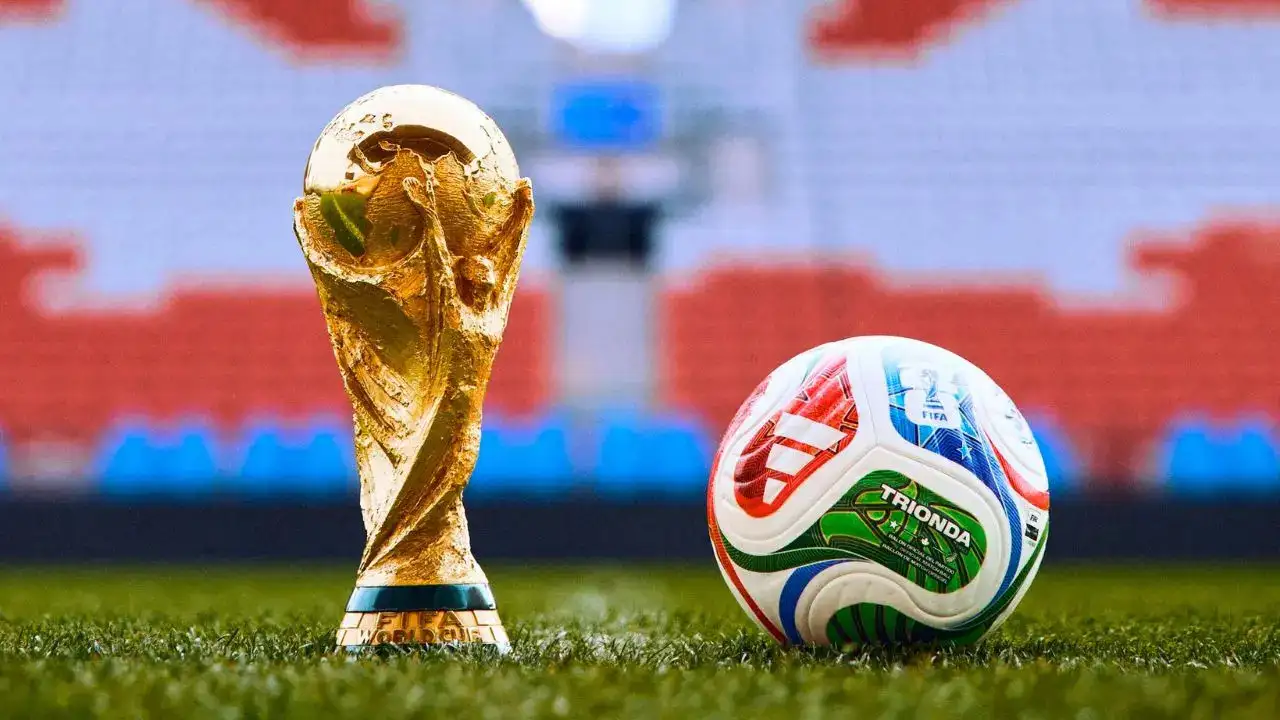
Mexico: Imagine the hush descending over Estadio Azteca, that colossal concrete cauldron in Mexico City where 87,000 souls once roared as Maradona stitched immortality into a single sunlit afternoon. It is June 11, 2026—kickoff at 3 p.m. local time—and the air crackles with a weight that feels almost tectonic. History is not just returning; it is gathering itself, inhaling, swelling across the terraces. Mexico, true to tradition, walks out as ceremonial hosts, facing South Africa in a matchup that rekindles memories of 2010’s gritty opener in Johannesburg. Yet this is no nostalgic tribute act. This is the spark meant to ignite 104 matches, 48 nations, and a three-country odyssey designed to reshape the soul of global football.
The schedule that delivered this moment arrived with thunderclap theatrics on December 6, 2025. The broadcast from Washington D.C., staged just a day after the Final Draw at the Kennedy Center, was less a release of fixtures and more a planetary-scale premiere. FIFA President Gianni Infantino sat center-stage flanked by Kevin Hart and Heidi Klum, while U.S. President Donald Trump—fresh from accepting FIFA’s inaugural “peace prize,” a gesture equal parts audacity and provocation—wore a grin that seemed permanently lacquered. Billions watched. Billions judged. And billions, inevitably, were drawn into the spectacle.
A Tour Across a Continent
From Vancouver’s mist-swathed pitches to Miami’s tropical glare, from Atlanta’s electric turbine of noise to Kansas City’s unexpected heartland pulse, the blueprint is now etched. Sixteen U.S. stadiums, three in Mexico, two in Canada—an elastic, sprawling festival stretching more than 5,000 miles. It’s a tournament that doesn’t merely spread across borders; it defies the concept of borders. Teams, officials, broadcasters, and fans will crisscross a subcontinent in patterns more akin to migratory birds than football travelers. The logistics are staggering—charter flights, bullet trains, fan buses, pop-up bases, and city governments preparing for crowds that may overwhelm even North America’s vast urban machinery.
The group stage runs June 11–26. Knockouts fire into July. The final unfolds on July 19 at MetLife Stadium—rebadged as New York New Jersey Stadium to thwart ambush marketers—in what could become the most-watched event in human history. Semifinals in Dallas and Atlanta promise indoor thunder under retractable roofs, while quarterfinals take root in Los Angeles, Seattle, and Guadalajara.
Everything feels colossal. But beneath the fireworks lies tension—palpable, simmering, sharp as a studs-up tackle on slick grass.
The Stakes for Legends
For the players, the World Cup is always an altar. But this tournament, expansive and unpredictable, carries stakes that feel almost mythic.
Lionel Messi, 39, could pull on the Argentina shirt for one final dance, playing group stage matches practically in Inter Miami’s backyard. Group B—shared with Colombia, a playoff survivor like Jamaica or DR Congo, and Fabio Cannavaro’s ambitious Uzbekistan—offers dangers wrapped in unfamiliarity. Can the GOAT’s battered legs hold one more time? Can he resist the pull of ordinary retirement when a third world crown glimmers on the horizon?
Across the Atlantic, Kylian Mbappé arrives like a comet tracing toward destiny. France, seeded third, collide with Senegal in Group I—an encounter thick with colonial echoes and competitive fire. Sadio Mané’s silky resilience meets Mbappé’s warp-speed fury, while Erling Haaland’s Norway lurks like a Nordic storm front eager to avenge years of near-misses. Imagine the sight: Haaland towering above defenders like a frost giant, battering Bolivia, Suriname, or Iraq—one of whom will survive the March 2026 playoffs in Guadalajara and Monterrey.
These are not fixtures. These are crucibles. One stumble and legacies bend or break.
Cristiano Ronaldo, 41, sees Group F as both sanctuary and challenge. Portugal face a playoff opponent—perhaps Jamaica, DR Congo, or New Caledonia—followed by Uzbekistan and Colombia. Will CR7’s finale be a fireworks display or a flickering fade-out? Every Brazilian forward, every Spanish midfield metronome, every rising African winger knows the truth: in a 48-team labyrinth, one bad half can swallow a career whole.
Pressure on Nations
At the national level, the stakes sharpen like blades.
The United States, returning as hosts for the first time since 1994, land in Group D with Spain, Ecuador, and Cape Verde. It is a group steeped in storylines: Spain’s hunger for a second star, Ecuador’s rebellious youth, Cape Verde’s fairytale debut. Under Mauricio Pochettino, the USMNT begins in Los Angeles on June 12—Hollywood promising scripts, drama, and disaster in equal measure. Alexi Lalas told the world America should expect to top the group. The bookmakers disagreed, marking the U.S. as +6600 outsiders. A deep run could jolt U.S. soccer into an awakening; an early exit could plunge it into years of soul-searching.
Mexico, meanwhile, feels destiny tightening around its throat. Group A offers South Africa, Korea Republic, and a European playoff entrant such as Denmark or Czechia. The Azteca opener is more than ceremonial—it is a national referendum. El Tri have not reached a quarterfinal since 1986, the last time they hosted. The nation’s football identity, often fragile, now feels combustible.
Canada, nestled in Groups C and H, split between Toronto and Vancouver, open against Peru and a European playoff team. Alphonso Davies carries the dreams of a generation. Anything less than the knockout stage threatens to sour the country’s giant investments in infrastructure, academies, and MLS-driven pipelines.
Africa arrives with nine slots, a monumental leap from the traditional five. Senegal, Ghana, Morocco, Tunisia—each sees a once-in-history opportunity. The diaspora crowds in Toronto, New York, and Atlanta may transform stands into thunderous seas of green, red, and gold.
Group L—England, Croatia, Norway, Panama—emerges as a volcanic Group of Death. South America brings Brazil, Uruguay, Argentina, Ecuador, Colombia, and Peru, each traveling with vast expectations and continental pride.

Economic Earthquakes
Economically, the tournament may be the most lucrative—and risky—undertaking in modern sporting history. FIFA projects $11 billion in revenue, driven by North America’s TV behemoths, hospitality markets, and a corporate sponsorship frenzy unmatched even by Qatar.
Dallas has spent nearly $2.5 billion upgrading facilities. Kansas City expects half a billion dollars in economic activity as Argentina fans have essentially adopted the city as their U.S. base. Boston’s Gillette Stadium prepares for semifinal waves.
But shadows loom. Five million projected visitors could strain airports, public transit, and hotel capacity. Los Angeles fears gridlock. Vancouver prepares for price-gouging scrutiny. Labor unions warn of underpaid staff and overworked temp workers—a specter eerily reminiscent of Qatar’s scars.
Human rights groups caution against “sportswashing,” though host committees promise equity, oversight, and inclusion. The world remains skeptical.
FIFA’s gamble is existential: 6 billion expected digital “accesses,” Infantino boasting of “104 Super Bowls in one.” A broadcast flop could cripple sponsors. A smash hit could entrench North America as the sport’s new economic axis.
Culture at a Crossroads
Beyond economics and athletics lies a cultural turning point. The 48-team expansion cracks the World Cup open to newcomers—Jordan, Uzbekistan, Curaçao, Cape Verde. Their presence injects romance but stirs debate. Traditionalists lament dilution, warning that bloated fixtures could cheapen drama. Playoffs in March stretch the global calendar, enraging clubs already strained by travel, injuries, and congested schedules.
The geopolitical currents swirl, too. Trump’s involvement adds a polarizing footnote, in stark contrast to earlier eras of soft diplomacy. Brazil prepares for the Women’s World Cup 2027 as conversations around gender equity sharpen.
The Human Pulse
In the end, the fans define the heartbeat.
Argentina supporters turned Kansas City’s Union Station blue and white after the draw, drums pounding into the night. In New York, bars reverberate with multilingual chants. In Atlanta, Korean families prepare bento boxes for tailgate picnics. In Mexico City, grandparents tell vuvuzela-tinged stories of 2010.
Tickets drop in early 2026. Scalpers sharpen their knives, anticipation mutates into frenzy, and itineraries—Vancouver to Seattle to Denver—begin circulating like pilgrimage maps.
The World Awaits the First Whistle
As Mexico-South Africa looms, one can almost hear the vuvuzela ghosts. U.S.-Spain promises fireworks in Los Angeles. England-Croatia feels like déjà vu wrapped in danger. Brazil walks a tightrope. France and Argentina lurk on opposite halves of the bracket by design, destined, perhaps, for a final collision unless someone—Uzbekistan? Cape Verde? Ecuador?—shatters the prophecy.
The pitch is ready. Verdant. Unforgiving. Hostile to complacency, kind only to courage. This is 2026’s grand theatre, where every pass becomes a prayer and every goal a grail.
And as the world leans in—breath held, knuckles white—the question reverberates across continents:
What will endure, and what will shatter, when football’s greatest odyssey finally begins?